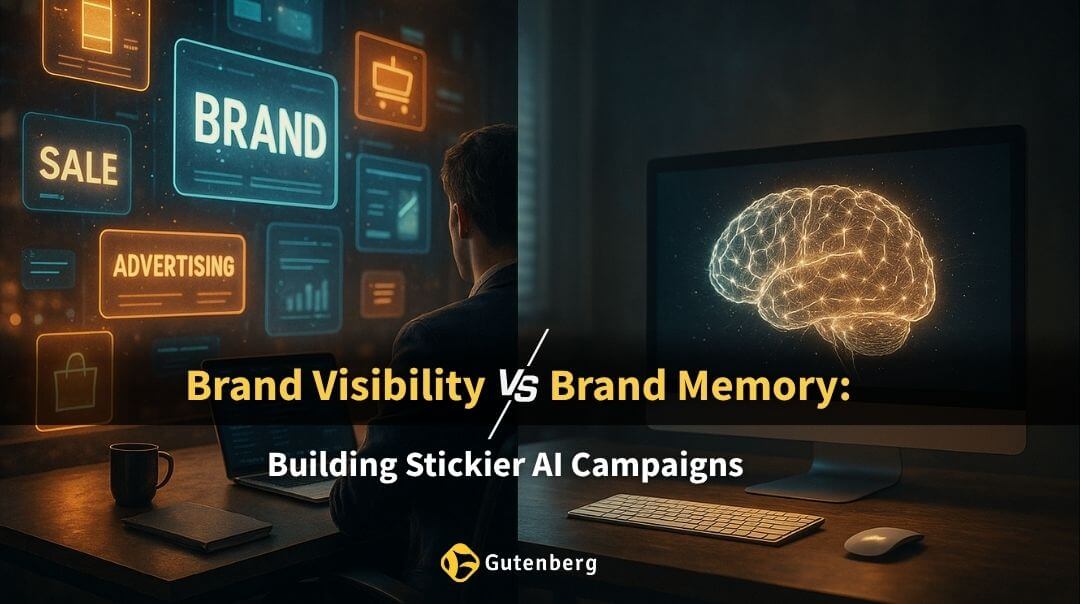
Brand Visibility vs. Brand Memory: Building Stickier AI Campaigns in 2025
Brand investment now extends far beyond simply being seen. In 2025, success depends on balancing brand visibility vs brand memory. The difference between visibility and memory is the difference between winning mindshare for a moment and building lasting customer loyalty. This blog explores why both are critical, how AI-powered marketing campaigns are reshaping strategies, and the best tactics US marketers need for longer-lasting impact—backed by research, stats, and actionable insights.
The New Table Stakes: Brand Visibility in 2025
Competition is increasing, platforms are shifting, and consumers are smarter than ever. Balancing brand awareness and recall is no longer an either-or issue. Getting noticed is just the first move.
AI-driven Visibility: Beyond the Obvious
Personalization and discovery
Personalization in machine learning-led campaigns leverages first-party data for sharper reach. Nearly 62% of US consumers say a YouTube video influenced their purchase decision. Predictive targeting, dynamic creative, and formats like shoppable video improve discoverability across channels.
GEO is changing how brands show up. Generative Engine Optimization now ensures visibility in Google SGE, ChatGPT, Perplexity, Gemini, and more. Localization ensures stronger resonance by tailoring campaigns for regional preferences across the US.
Visibility today is not just about reach; it is also about credibility. Real-time AI data storytelling plays a key role, helping marketers reinforce campaign visibility with live visuals that strengthen trust as the message spreads.
SEO and GEO Tips
- Headlines: Focus headlines and meta descriptions on search intent and US-localized terms
- Assets: Use text, video, and voice assets to support multi-channel discovery
- GEO: Optimize for generative search and AI platforms
| Visibility Tactic | AI Capability | Impact |
|---|---|---|
| Predictive campaign targeting | ML-driven segmentation | More precise reach |
| Shoppable/interactive video | Dynamic creative swaps | 62% influence rate |
| Localized creative per US region | Automated geo-adaptation | Higher engagement |
Brand Memory: Securing Long-Term Recall
Getting noticed matters, but being remembered drives long-term growth. The difference between short-term visibility vs long-term memory is clear—visibility may win the moment, but memory builds next year’s sales.
AI for Memorable Impressions
Neuromarketing uses AI-powered marketing campaigns to test and optimize creative elements proven to spark recall. Generative messaging sequences powered by AI engagement platforms deliver personalized follow-ups via email, SMS, and push, strengthening memory. Automated knowledge hubs keep campaign storytelling consistent and accessible for customers.
One of the biggest challenges here is consistency in voice. Even as AI generates tailored campaigns, businesses must ensure the message feels authentic. Generative AI storytelling techniques help balance optimization with brand integrity so recall does not come at the cost of personality.
SEO and GEO Tips
- Semantic terms: Integrate terms like brand recall, sticky messaging, and memory marketing
- Cultural cues: Include US-specific cultural cues in campaign stories for deeper resonance
| Memory Catalyst | AI Functionality | Outcome |
|---|---|---|
| Personalized messaging sequences | Automated recall optimization | Higher persistence |
| Visual/story resonance testing | AI-driven creative evolution | Long-term memorability |
| US region/culture adaptation | Hyper-local AI linguistics | Deeper audience ties |
Creating Habit-Forming Campaigns: Building Lasting Impact
The sweet spot between brand recall vs awareness often lies in creating habit-forming campaigns that turn attention into long-term habits. Modern strategies go beyond short-term clicks. The goal is embedding brands into daily life.
Conversational and Interactive AI
Chatbots, voice assistants, and AR tools built through AI engagement platforms create real-time, context-aware brand touchpoints. Adaptive micro-content and video formats show strong traction—75% of brands using these AI-driven approaches report measurable gains in engagement. These interactions make advertising part of the consumer’s routine rather than a one-off exposure, creating a habit loop that strengthens both visibility and memory.
SEO and GEO Tips
- US behaviors: Address US-specific consumption behaviors in campaign planning
- Channel balance: Balance campaign assets across YouTube, TikTok, and smart home devices
| Engagement Driver | AI Solution Type | Business Value |
|---|---|---|
| Real-time chatbot interactions | Conversational AI | Higher engagement, daily use |
| Interactive/adaptive video content | AI-driven personalization | 75% report more stickiness |
| AR/voice-integrated campaigns | Contextual, US-lifestyle focus | Habits, not just moments |
Brand Consistency: The Revenue Multiplier
Maintaining brand consistency ensures every channel builds stronger memory and trust. It is directly tied to revenue outcomes.
AI-Powered Brand Compliance
Centralized dashboards flag inconsistencies in visuals or tone before campaigns go live. Automated tools guarantee US-localized campaigns still retain signature brand assets. Consistent brands in the US report up to 33% higher revenue growth.
SEO and GEO Tips
- Templates: Use uniform templates across US campaigns to make discoverability and recall easier
- AI checks: Use AI to ensure legal, cultural, and creative alignment while reinforcing recognition
| Brand Consistency Feature | AI Benefit | Business Impact |
|---|---|---|
| Compliance monitoring | Instant drift alerts | Fewer costly errors |
| Asset hub deployment | Centralized updates | +33% revenue |
| US-localized templates | Adaptation at scale | Market alignment |
Gutenberg: Your AI Visibility and Memory Engine for the US Market
Centralized recall and consistency
Gutenberg acts as the central engine for AI-powered marketing for US businesses. Proprietary AI sequences adapt delivery for better retention across customer journeys. Messaging formats are continuously tested for emotional and logical resonance. Centralized hubs detect drift and enforce brand guidelines for US markets.
As an award-winning creative marketing agency, Gutenberg offers content strategy services that align storytelling with both reach and recall. The result is an integrated platform that not only boosts recognition but ensures memory sticks long after the campaign ends.
The SEO & GEO Optimization Playbook for 2025
AI-first Optimization Checklist
- Keywords: Use US-focused keyword research tailored for classic SEO and generative search
- Adaptation: Adapt creative assets for cultural and regional nuances
- Analytics: Monitor and optimize campaign data in real time using AI analytics
| Playbook Step | GEO/SEO Priority | Effect |
|---|---|---|
| US keyword targeting | Better search match | Higher organic visibility |
| Region-specific creative adaptation | Cultural relevance | Increased engagement |
| Continuous AI-driven analytics | Fast optimization | Reduced campaign waste |
2025 Fast Facts: Brand Visibility vs Brand Memory
| Trend/Strategy | AI Approach | 2025 Effect on US Market |
|---|---|---|
| Predictive, cross-channel campaigns | Personalization & shoppable video | 62% of buyers influenced (Google) |
| Recall optimization | Neuromarketing & memory AI | Higher conversion/longer recall |
| Habit-forming engagement | Conversational/micro-content | +75% stickiness (Deusens) |
| Brand consistency | Compliance dashboards | +33% revenue (Digital Journal) |
Conclusion
Balancing brand recall vs awareness is now essential for growth in 2025. Effective AI-powered marketing campaigns can secure immediate recognition and enduring recall when paired with strong brand recall strategies, purposeful AI engagement platforms, and ongoing brand consistency. Brands ready to move from fleeting impressions to lasting presence should audit their strategies and align for both reach and recall. With support from agencies like Gutenberg, lasting impact and measurable brand value are within reach.
Frequently Asked Questions
1. What is the difference between brand visibility vs brand memory in US marketing?
Brand visibility is about being noticed across digital platforms, while brand memory focuses on being remembered by customers long-term. In the US, balancing both ensures AI-driven campaigns not only capture attention but also build loyalty.
2. How are AI-driven brand campaigns improving visibility for US businesses?
AI-driven brand campaigns use predictive targeting, personalization, and shoppable video formats to increase visibility. With Generative Engine Optimization, US brands can now rank across search engines, voice assistants, and AI platforms like Google SGE and ChatGPT.
3. Why are brand recall strategies critical for US marketers in 2025?
Brand recall strategies secure long-term impact by ensuring consumers remember the brand after initial exposure. Using neuromarketing, memory-focused messaging, and localized US storytelling, marketers improve both recall and repeat purchase rates.
4. How does consumer engagement AI make ad campaigns stickier?
Consumer engagement AI powers chatbots, AR experiences, and adaptive content that connect with US audiences in real time. This makes campaigns sticky, embedding brands into daily routines rather than delivering short-lived impressions.
5. What role does brand consistency play in driving revenue growth in the US?
Brand consistency ensures all US campaigns maintain a unified voice, visual identity, and tone. Research shows consistent brands can generate up to 33% higher revenue by strengthening recognition and reducing message confusion.
6. How can US companies optimize for both SEO and GEO in 2025?
US companies should use localized keyword research, optimize for generative AI platforms, and adapt creative content to regional culture. GEO ensures brands show up across AI-first search engines, while SEO continues to secure visibility in traditional search results.
7. What tools can US marketers use to balance brand visibility and memory?
US marketers often turn to platforms that combine campaign orchestration, recall optimization, and compliance monitoring. Solutions like Gutenberg help brands maintain visibility while embedding memory triggers across personalized campaigns.