A prospect asked ChatGPT which vendor handles enterprise claims processing at scale, and a competitor’s name came up first. Nobody on your team saw that conversation happen. There’s no line item for it in your quarterly report. It happened anyway, and that’s exactly what AI search is doing to enterprise brands right now, whether their dashboards show it or not.
For brands, this isn’t a minor shift in tactics. It’s a change in where and how buyers form their first impression of you, often before your sales team ever gets a call. Your organic traffic can look flat to slightly up while your actual influence over that first impression moves somewhere your reporting simply can’t track yet.
How AI Search Is Changing Traditional Search
Search used to work the same way for twenty five years: type a question, get a list of links, click one to find your answer. That model is breaking down.
Zero-click search describes what happens when someone searches, gets an answer right on the results page, and never visits a website at all. A 2024 study found that nearly 60 percent of Google searches in the US and Europe ended without a follow-up click. That number describes a specific dataset from a specific year. Treat it as a strong signal of direction, not a permanent rule you can plan a whole strategy around.
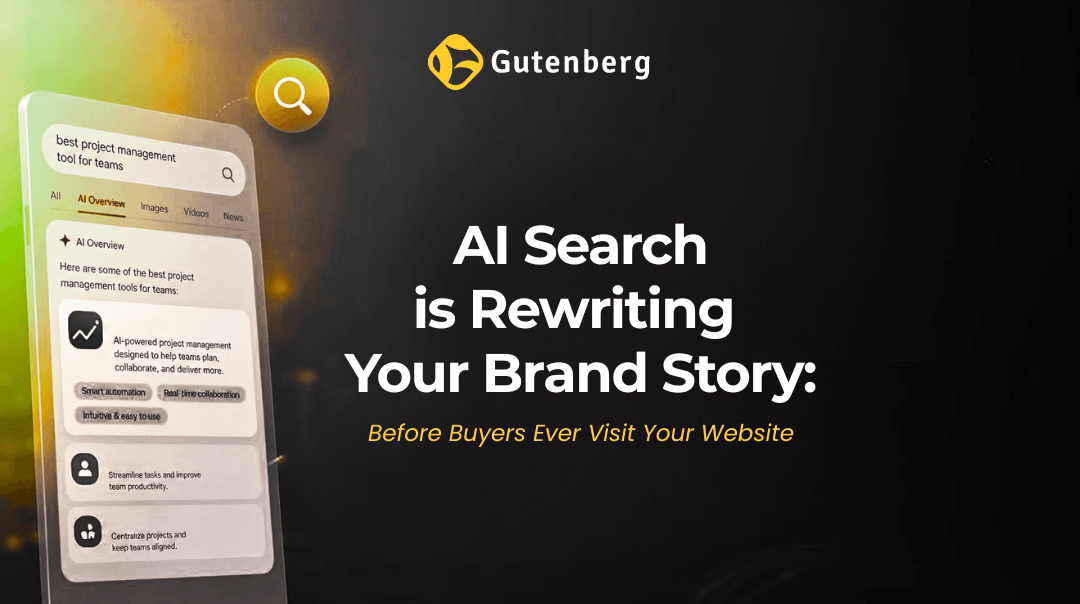
Google’s AI Overviews, the AI-generated summaries that now appear above traditional search results for many queries, are a big driver of this. Picture a buyer searching “best claims management software for mid-size insurers” instead of booking a demo. A few years ago, that search sent traffic to several vendor sites for comparison. Today it might return a short summary naming two or three vendors and stop there.
A few things enterprise teams should watch:
- Comparison queries, pricing questions, and category explainers are increasingly the searches getting answered without a single page view.
- Steady traffic numbers can hide a real drop in how often your brand gets named in those on-page answers.
- Sales teams may never learn a relevant search happened at all, because there’s no click to trace back.
How AI Search Engines Provide Answers Instead of Links
AI search tools don’t work like a card catalog matching your words to a page. Tools like ChatGPT, Perplexity, and Google’s AI-driven results read across many sources at once, pull out the parts that answer the question, and write something new.
This is generative search doing exactly what it was built to do: producing a fresh, original answer instead of surfacing an existing web page. Nobody ranks first in the traditional sense. Something gets written on the spot, blending pieces from different sources without always showing where each piece came from.
Think about a procurement analyst comparing two enterprise software platforms. They ask a chatbot to summarize the differences in implementation time and support quality, and get a paragraph that mixes your website’s claims with a review site’s complaints and a competitor’s case study. That analyst now has a view of your product built from an answer:
- You never wrote it yourself.
- You have no way to see it happen in real time.
- It might be their entire first impression of your brand before a single sales conversation.
There’s no click for anyone on your side to notice, which is exactly why this deserves more attention than most quarterly reports currently give it.
What Answer Engines Actually Look For
Answer engines are the AI-powered search and chat tools built to generate a direct response instead of a list of links. They favor content that’s easy to lift and easy to trust, which is a different bar than ranking for a keyword.
A few patterns show up consistently in what these systems choose to repeat:
- A direct answer near the top of the page, not three paragraphs of setup before the actual point.
- Consistent facts across your own site, industry directories, press coverage, and social profiles. A pricing figure that differs from one of your pages to the next makes a system less likely to trust either version.
- Original evidence, like proprietary research, named case studies, or data nobody else has published.
- Citations, meaning references and mentions from outlets and sources a system already treats as credible.
- Content structured with clear headings, defined terms, and real FAQs, so a system can pull a clean answer instead of guessing at one.
Most of this isn’t new. Good PR and content teams have practiced versions of it for years. It just has a new audience now: the models deciding what to repeat about your brand.
The Real Cost Is Not the Click, It Is the Story Someone Else Tells About You
Losing traffic is the part you can see on a chart. The bigger risk for a brand your size is quieter and harder to undo once it takes hold.
- If a system describes your product with outdated pricing or a feature you dropped two releases ago, that error can spread across every conversation the tool has, not just one page you can quietly correct.
- If competitors keep showing up in category answers and you don’t, a buyer’s shortlist may already be set before your team gets a call.
- A system can describe you accurately and still frame a competitor as the better fit for a use case, purely based on how each brand’s content is written and structured.
- Most analytics tools can’t show you when your brand was mentioned inside an answer instead of clicked, so leadership ends up planning around incomplete numbers.
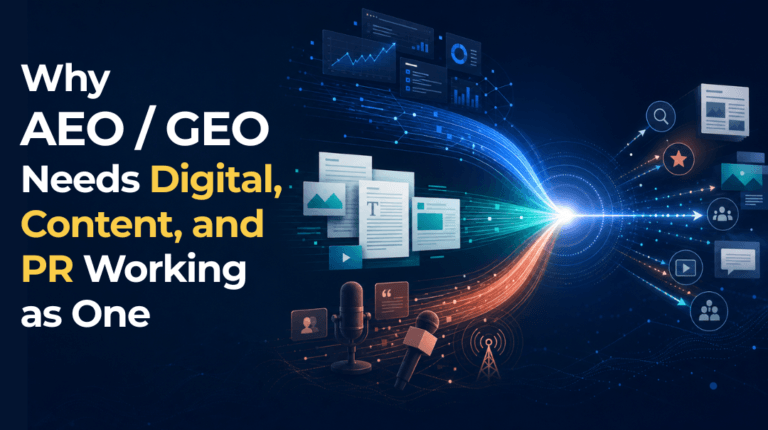
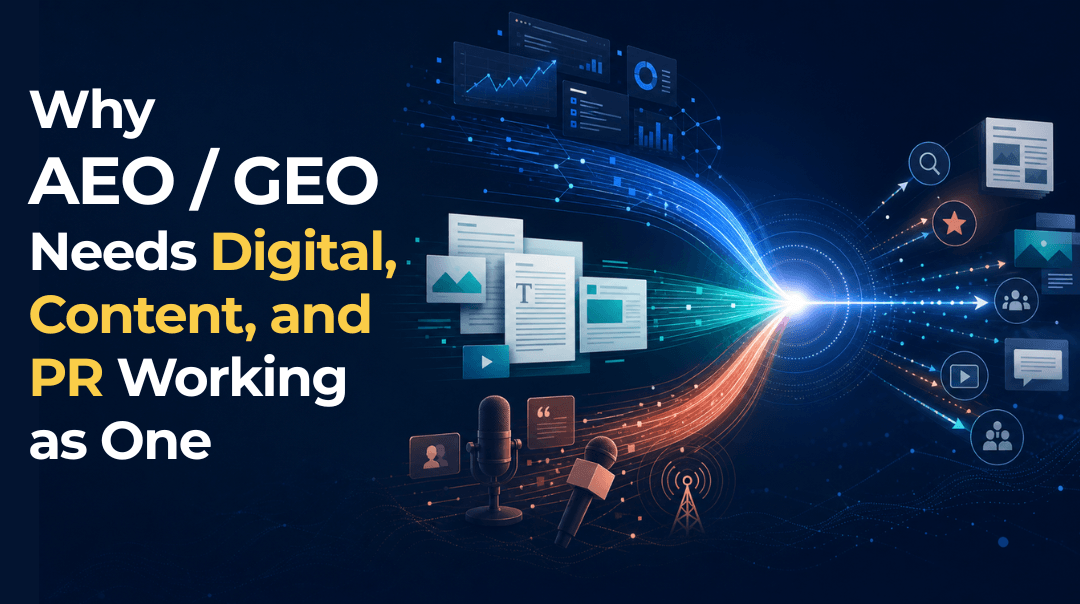
SEO, content, PR, and your subject matter experts often work from separate briefs and separate goals. A system reading your public footprint doesn’t know those teams exist. It sees everything you’ve published as one combined signal, so the gap between departments becomes the gap in your brand story.
How Businesses Can Optimize Content for AI Search
There’s no setting that guarantees a citation in ChatGPT or a mention in an AI Overview. There is a set of moves that improve your odds, and most enterprise teams already have the muscle for at least half of them.
- Answer the question in the first line of a page or heading, then support it with detail.
- Build one clear page per major product or claim that states the facts consistently, and point other content back to it.
- Write real FAQs with direct answers and use structured data, the behind-the-scenes labels that tell search engines and AI tools what a page actually means, not just what it displays.
- Publish something original, like a survey, a dataset, or a named case study, so a system has a reason to cite you instead of paraphrasing someone else’s summary.
- Earn coverage from outlets and analysts a system already treats as credible.
- Audit your website, directories, press pages, and social profiles for numbers that don’t match, and fix the ones that don’t.
- Ask the tools your buyers use the same questions they’d ask, on a regular schedule, and track how your brand gets described over time.
This builds on solid SEO fundamentals. It doesn’t replace them. It adds the clarity and proof that AI-generated answers need before a system will repeat what you say about yourself. For a deeper walk through this shift, our main content hub link for Ai visibility breaks down the connection between AEO, GEO, and traditional content and PR work.
How do you actually start optimizing for AI search?
Start small and specific. Pick your five most important product or category pages, rewrite the opening lines to answer the core question directly, and add FAQs with real answers. Then check how those pages get described across a few AI tools before expanding the effort.
Where Gutenberg Fits
This is the exact gap Gutenberg’s AI Visibility services are built to address. Most enterprise teams run SEO, AEO (structuring what you know so a system can extract a clean answer), GEO (strengthening the signals that help generative tools recommend and cite you), PR, content, and digital experience as separate workstreams with separate owners. A system reading your brand doesn’t see those lines. It sees one connected picture, accurate or not, aligned or not.
Gutenberg’s work helps enterprise brands see how they currently show up across AI systems, spot where the story is outdated or contradicted somewhere else on the internet, and build the structure and evidence needed to be described accurately. This isn’t about promising a specific ranking, citation, or mention. It’s about giving you visibility into something most reporting still misses, and a repeatable way to check it. If any of these terms feel new, our AI visibility glossary breaks down the vocabulary in plain language.
The practical next step is simple: take a real look at how your brand appears in the AI tools your buyers actually use, before deciding what needs to change.
FAQs
What does zero-click search mean for a brand our size?
It means a growing share of your category research happens on the answer page itself, with no visit to your site, whether or not you’re named. For a brand over $100 million in revenue, that shrinks how much traffic alone can tell you about your market standing.
Does traditional SEO still matter once AI Overviews are involved?
Yes. Clean, crawlable, well-organized content is still the raw material these systems pull from. SEO alone just isn’t enough anymore. It needs clear, citable writing and outside validation layered on top.
How do AI-generated answers change our control over our brand story?
They reduce it somewhat, since a system is paraphrasing your brand rather than a person reading your words directly. You can’t script every sentence a system produces, but consistent, well-documented facts shape the outcome heavily.
How can enterprise teams measure visibility across answer engines?
Ask the tools your buyers use the same questions they’d ask about your category, on a regular schedule, and record how you’re described compared with competitors. Add that data next to your existing SEO and PR metrics rather than replacing them.
What’s the first move for a team that hasn’t looked at this yet?
Run an honest check of how your brand shows up today across the AI search tools your buyers use, for your five or six most important questions. Note where facts are wrong and where a competitor is winning the framing, then get SEO, content, PR, and product experts working from the same set of facts.
The Bottom Line
- AI search increasingly answers the question itself, and enterprise brands need to be part of that answer, not just present somewhere on the results page.
- The nearly 60 percent zero-click figure from SparkToro and Datos describes 2024 search behavior specifically. Treat it as a directional signal, not a fixed rule for every quarter going forward.
- Answer engines reward content that is clear and easy to verify, more than raw ranking signals alone.
- The bigger risk is a system describing you wrong or leaving you out entirely, not a slightly smaller traffic number.
- Fixing this takes SEO, content, PR, and product knowledge working from the same facts, not one new tactic bolted onto an old plan.
The way buyers form opinions about your brand has already shifted toward these systems, whether your monthly report shows it yet or not. Take an honest look at how your brand is actually described across the AI tools your buyers use today, before you decide what, if anything, needs to change.