Introduction
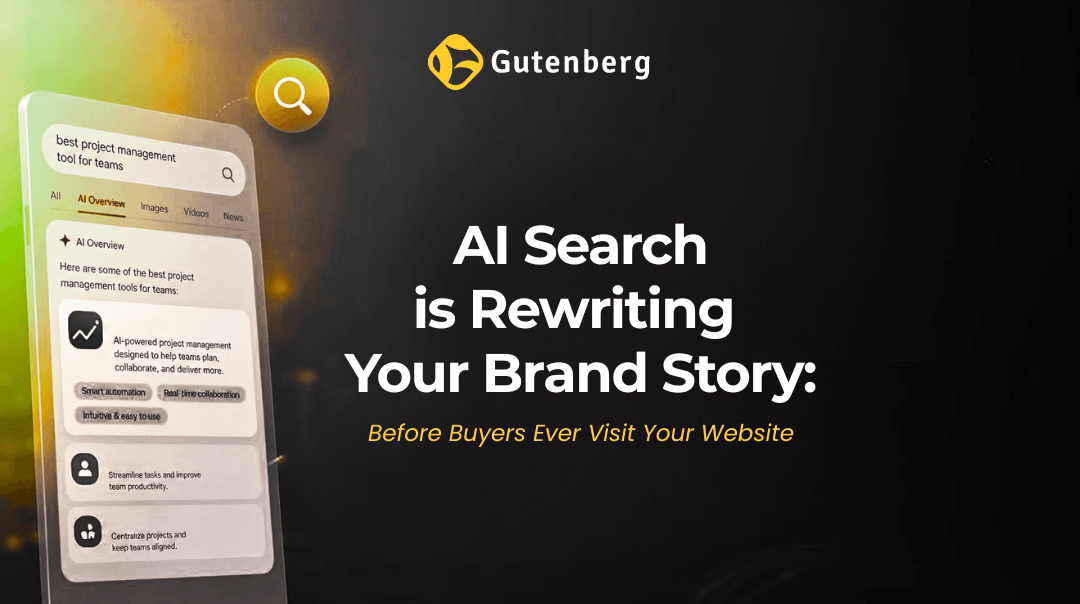
AI search is changing the game. Tools like ChatGPT, Perplexity, and Google’s AI Overviews are now answering the same questions your audience used to Google. And here is the uncomfortable truth: if your brand is not showing up in those answers, your competitors are.
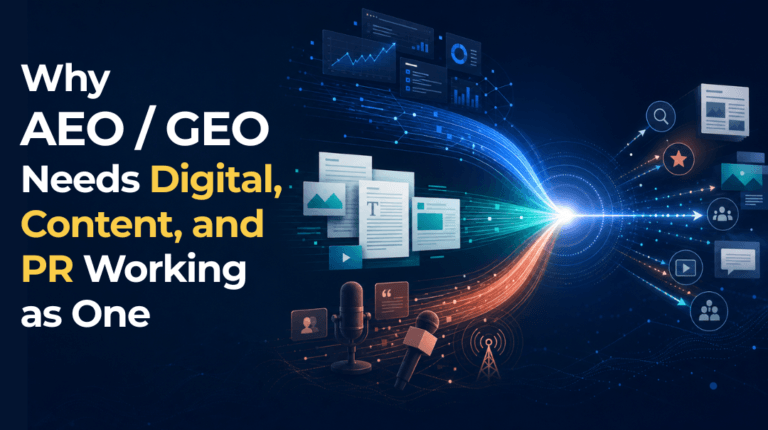
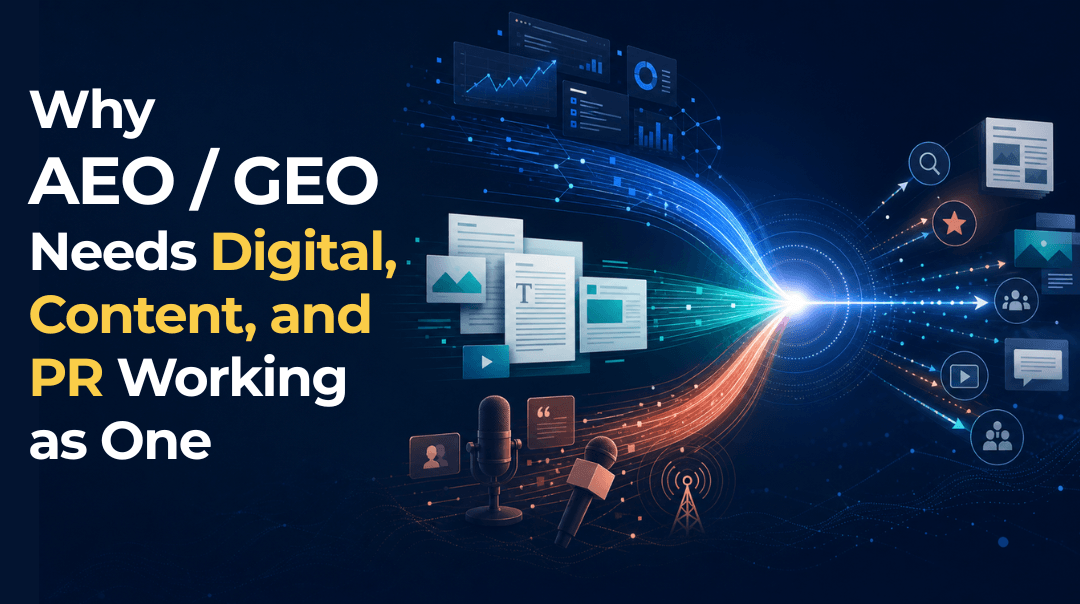
This is exactly why AI-enhanced PR, thought leadership marketing, AEO (Answer Engine Optimization), and GEO (Generative Engine Optimization) must work together as one strategy, not as separate boxes on your marketing plan.
Traditional PR metrics like impressions and media placements still matter. But they no longer tell the full story. The question now is whether your brand is being cited when an AI engine answers a question in your space. Brands that pair AI-powered PR strategy with strong, expert-driven content are the ones building that kind of visibility. And the good news? It is more achievable than it sounds. Here is how to get there.
What AEO and GEO Actually Mean for PR Teams
If you already know SEO, you have a head start. But AEO and GEO are different ball games, and PR teams need to understand the distinction to stay relevant.
AEO: Optimizing for Answers, Not Just Rankings
Answer engine optimization is about structuring your content and building the right authority signals, so AI assistants choose to cite your brand when answering user queries. SEO gets you ranked on a results page. AEO gets you cited in a direct answer.
Here is what sets AEO apart:
- It targets tools like Perplexity, ChatGPT, and Google AI Overviews
- It rewards content that directly answers specific questions
- It values brand authority and citation frequency in trusted publications
- It requires a shift in how you think about AI content visibility, not just traffic
For a deeper look at how to win AEO in your space, check out this guide on Answer Engine Optimization for tech brands.
GEO: How Generative Engines Decide Who to Trust
Generative engine optimization is the practice of making your content legible, credible, and citable for LLM-based search outputs. In simple terms, it means shaping your content so that AI models recognize your brand as a reliable source worth referencing.
GEO rewards brands that:
- Publish consistent, expert-level content over time
- Have a strong presence across high-authority publications
- Use structured, clear content formats that AI models can parse easily
- Build brand authority in AI search through repeated, topic-relevant mentions
If your PR team is not thinking about how AI models train on and surface content, you are already leaving visibility on the table.
The PR, Thought Leadership, and AI Search Triangle
Here is a simple way to think about the relationship between these three pillars. Each one feeds the others, and none of them works as well in isolation.
- AI-powered PR placements generate backlinks and brand mentions that signal authority to AI models
- Thought leadership content gives AI engines the substance they need to extract credible answers
- AEO and GEO optimization ensures that all the above is structured for discoverability
The problem with running these as separate efforts:
- PR without thought leadership = visibility without credibility
- Thought leadership without PR = expertise without reach
- AEO/GEO without either = well-optimized content that no one trusts
AI engines do not just crawl websites. They synthesize with authority. Your brand’s citation frequency in high-trust publications is a real ranking signal in the age of AI search.
Want to understand how AI is reshaping content strategy at a broader level? This piece on the role of AI in content marketing for IT and SaaS companies is a great starting point.
How AI-Powered PR Strategy Builds AEO and GEO Signals
Your PR activities are not just about media coverage anymore. In the AI search era, every placement is a potential authority signal. Here is how to make your AI in public relations efforts work harder for your search visibility.
Earn Placements in Publications AI Models Trust
Not all press is equal when it comes to AI search. AI models are trained on content from high-authority sources, so placements in trusted outlets carry more weight.
- Prioritize publications like Forbes, Harvard Business Review, industry trade journals, and well-known niche outlets in your vertical
- Use AI-powered PR tools like Muck Rack, Cision, and Prowly to identify journalists whose work is consistently picked up by LLMs
- Track which outlets your competitors get cited from in AI-driven brand authority searches, then target those same outlets
- Build relationships with journalists who cover your exact topic niche, not just your broader industry
Write Press Releases That AI Can Actually Use
Most press releases are written for humans and buried in a news wire. If you want AI-powered content distribution to work in your favor, you need to write releases that AI models can parse and cite.
- Lead with a clear, direct answer to the most likely question your audience is asking
- Use FAQ-style formatting within releases to make answers easy to extract
- Back every claim with data, a named source, or a third-party reference
- Keep sentences short and structured. AI models prefer clarity over flair
- Weave in your digital PR strategy keywords naturally so topic association builds over time
Build a Consistent Brand Mention Ecosystem
One placement is noise. Consistent placements across trusted sources are a signal. AI models associate your brand with specific topics through repeated, relevant mentions.
- Develop a 12-month PR calendar tied to your core thought leadership topics
- Ensure your brand name, executive names, and key product terms appear together across placements
- Supplement earned media with contributed articles, podcast appearances, and panel features
- Cross-publish and syndicate content to extend reach without duplicating work
Thought Leadership Content as an AEO and GEO Asset
If PR is what gets your brand seen, AI thought leadership content is what makes AI engines trust you. Here is what makes thought leadership content actually perform in AI search.
What AI Engines Look for in Thought Leadership Content
AI models are not impressed by buzzwords or generic takes. They favor content that demonstrates genuine expertise and answers real questions.
- Originality of insight: Your content should say something that is not already everywhere online
- Specificity: Broad takes do not get cited. Specific frameworks, named processes, and concrete examples do
- Structure: Numbered lists, clear definitions, and logical flow make content easier for AI to parse
- Expert attribution: Named contributors with real credentials build more trust than anonymous content
- Update frequency: Regularly refreshed content stays relevant in AI training cycles
Content Formats That Work Best for AEO and GEO
Not all formats serve thought leadership SEO equally. Some are much better suited to AI discoverability than others.
- Long-form opinion pieces backed by proprietary data or original research
- Executive bylines in authoritative trade publications
- FAQ-driven blogs and definitive guides that answer specific questions from top to bottom
- Podcast transcripts and video summaries (AI models index metadata and captions, not just text)
- Case studies with named results, specific numbers, and structured outcomes
How to Distribute Thought Leadership for Maximum AI Visibility
Publishing great content is only half the job. Where and how you distribute it determines how often it gets picked up by AI engines.
- Syndicate to high-authority platforms in your niche
- Use internal linking to connect thought leadership pieces to your core pillar content
- Repurpose long-form pieces into multiple formats to increase touchpoints across platforms
- Share across channels where AI-driven PR strategy is most active, including LinkedIn, newsletters, and partner sites
- Pitch your best content for inclusion in industry roundups and listicles, which AI models frequently cite
New KPIs That Actually Reflect AEO and GEO Performance
Here is the hard part: most PR dashboards are not built for this. If you are still measuring success by AVE or total impressions alone, you are flying blind in the AI search era.
These are the metrics that matter now:
- Citation frequency in AI-generated answers: How often does your brand appear when AI tools answer questions in your space?
- Share of model: Analogous to share of voice, this measures how often your brand surfaces in AI outputs for your target queries across different platforms
- Topical authority score: How consistently is your brand mentioned alongside specific topics across your publishing ecosystem
- Referral traffic from AI platforms: Track visits arriving from ChatGPT Browse, Perplexity, and similar sources in your analytics
- Placement quality index: Score your media placements not just by outlet size but by their likelihood of being indexed by AI models
A growing share of B2B buyers now use AI search tools during the research phase. If your brand is not appearing in those answers, you are invisible at a critical moment in the buying journey.
How The Gutenberg Helps You Build This Strategy End to End
Building the kind of AI-enhanced PR and thought leadership ecosystem described here takes more than good intentions. It takes a team that understands both the content side and the technical side of AI search. That is exactly what we do at Gutenberg.
Integrated PR and Brand Authority Services
Our integrated marketing and PR services are built around helping your brand earn visibility in the places that matter most. Whether that is a placement in a high-authority trade publication, an executive byline program, or a sustained media relations strategy, we approach every PR effort with AI search visibility in mind.
- Media strategy designed for both human audiences and AI discoverability
- Executive thought leadership programs that build lasting brand authority
- Press release and pitch writing that is structured for AI ingestion
- Publication targeting based on AI model training data and citation patterns
AEO and GEO Strategy
We help brands structure their content and PR presence to perform in AI-first search environments. Our answer engine optimization work covers everything from content audits to structured data setup to publication strategy.
- AEO audits to identify gaps in your current content structure
- GEO content planning aligned to your most important topic clusters
- FAQ and schema markup implementation for better AI citation
- Ongoing monitoring of brand citation frequency across AI platforms
AI-Powered Content and Thought Leadership Creation
Our content team creates AI thought leadership content that is built to be cited. That means original insights, structured formats, expert attribution, and a distribution plan that extends reach across the channels AI models trust.
- Long-form thought leadership articles and executive bylines
- Data-driven content strategies tied to your business goals
- Repurposing and syndication to maximize AI content visibility
- Content performance tracking with AI-era KPIs
Whether you are just starting to think about AEO and GEO or are ready to scale a full AI-powered PR strategy, The Gutenberg team is here to help you build it right.
—
Frequently Asked Questions
1. What is the difference between AEO and GEO? Answer engine optimization focuses on getting your brand cited in direct AI-generated answers, while generative engine optimization is the broader practice of making your content legible and trustworthy for LLM-based search outputs overall.
2. How does AI-enhanced PR improve search visibility? It helps earn brand mentions and backlinks in high-authority publications that AI models train on, which directly increases how often your brand gets cited in AI-generated answers.
3. What types of thought leadership content perform best for AEO? Long-form opinion pieces with original data, FAQ-driven guides, and executive bylines in authoritative outlets tend to get cited most often by AI engines.
4. Do I need a separate strategy for AEO and GEO, or can I combine them? They can absolutely be combined. A unified strategy that connects your PR efforts, thought leadership content, and technical optimization delivers the best results for both.
Stop guessing if your brand is showing up in AI search. Let us build the strategy that puts you there.